Medical Device, Maintenance, and Asset Management
The Basic Information to Record When Adding a New Medical Device to the Inventory
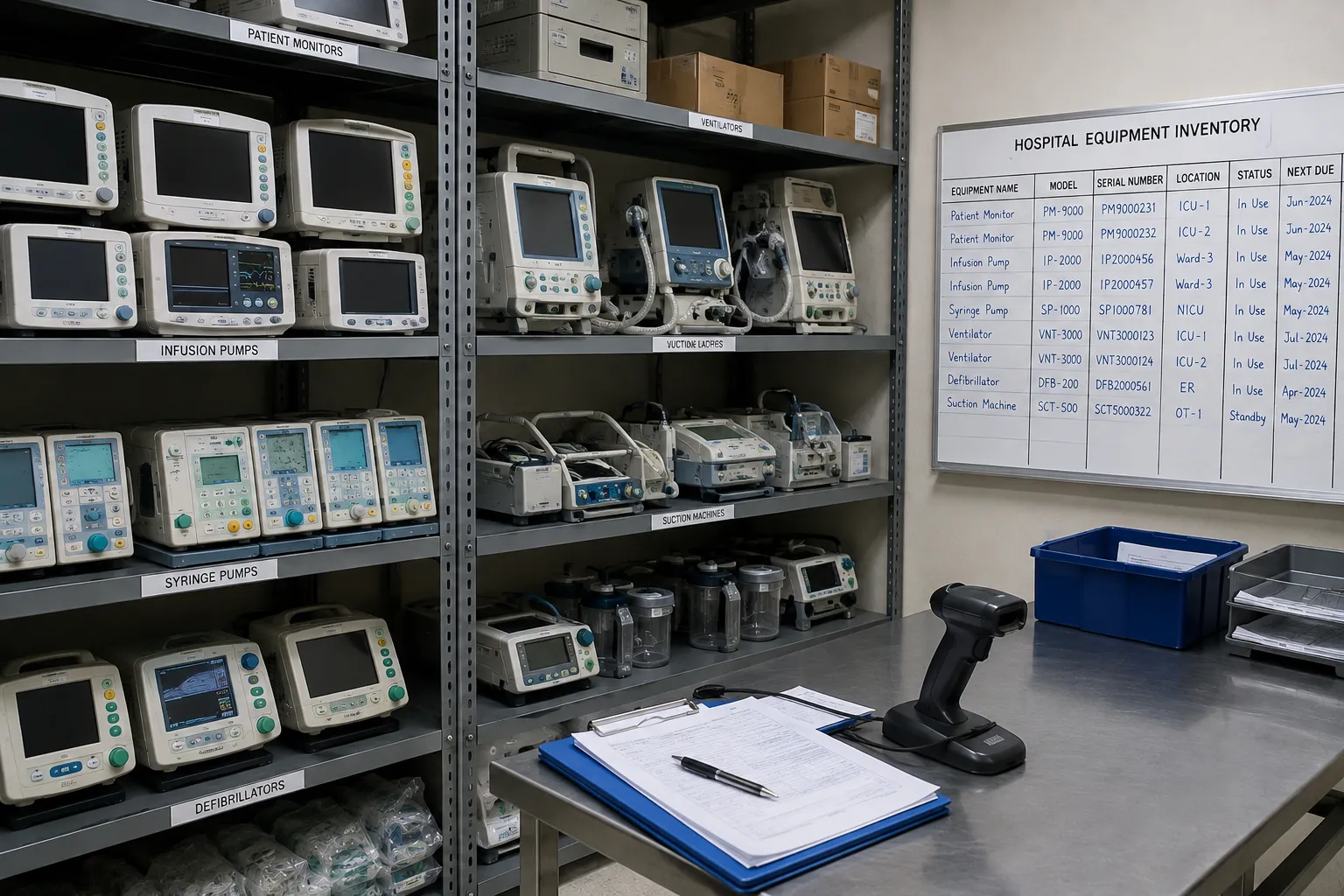
In a previous post, we discussed the essential documents required when receiving a new medical device. Today, we’ll take a closer look at the key information that should be collected before adding these devices to a healthcare facility’s maintenance system. This information is vital to ensuring effective maintenance and support throughout the device’s service life. Here is the basic information to include in the record for every new medical device:

By Khalid Ziada
- Unique device identification number (Control Number)
- Common or trade name (Common Name)
- Device code according to the agreed nomenclature system (Nomenclature Code):
- EMDN
- GMDN
- UMDNS
- UNSPSC
- Device name according to the agreed nomenclature system (Nomenclature Description)
- Manufacturer
- Model name or number
- Serial number
- Country of origin
- Expected service life
- Year of manufacture
- Estimated end-of-life date (EOL)
- Owning department
- Location
- Installation date
- Warranty expiration date
- Electrical safety class (Equipment Class):
- Class I
- Class II
- Class IP
- Applied-part type (Equipment Type):
- Type B
- Type BF
- Type CF
- Procurement type (Purchase Type):
- Direct purchase
- Tender procurement
- Consumables deal
- Laboratory reagent deal
- Guaranteed price per reportable result
- Free of charge / donation
- Purchase order number
- Purchase price
- Vendor name
- Maintenance service provider
- Risk classification:
- High
- Medium
- Low
- Operating system:
- Windows
- Linux
- iOS
- Software revision number
- Software license
- Connected networks or systems:
- PACS
- DICOM
- Cerner
- Sectra
- IP address
- MAC address
Summary
Understanding and accurately documenting this information supports effective maintenance and improves the overall management of medical devices, helping to enhance the quality of healthcare services.